

At Bayshire Carlsbad, we recognize how serious a concern dementia is for individuals with memory loss. While the progression of the disease can’t be halted, it can be managed through specific measures, with certain activities playing an especially important role. These activities span various facets of their well-being. It not only keeps them engaged but also supports their overall well-being, helping them lead normal, thriving lives despite their memory condition. Let’s learn about the different daily activities memory care residents engage in to experience elevated levels of wellness.
Cognitive & Brain Games
Games aren’t just for kids; they’re for everyone looking for some fun and brain stimulation. In memory care communities, seniors are encouraged to play games they are already familiar with. This proves to be a great way to focus on enhancing recall and problem-solving in a low-pressure way. Here are the cognitive & brain games memory care communities offer to support seniors with memory loss.
Simple Puzzles & Word Games
Jigsaw puzzles, crosswords, sudoku challenges, matching/card games, and word searches are a few examples of puzzles & word games that memory care communities offer to support residents’ cognitive functioning. It improves their attention span, boosts mood, strengthens neural connections, and fosters social interaction, too.
Card Games
Classic card games like Solitaire, Go Fish, and Memory Match not only help stimulate cognitive function but also enhance emotional well-being. These games improve memory retention, strategic thinking, and pattern recognition while reducing anxiety, slowing down cognitive decline, and combating isolation.
Board Games
Board games like Bingo, Dominoes, Chess, Scrabble, and Connect Four are also important for improving cognitive function, strengthening social connections, and reducing stress. Engaging in these board games stimulates their brains, improves memory recall, and slows cognitive decline.
Trivia
In this activity, residents gather around and ask each other simple, nostalgic questions about the past. This simple-looking activity provides mental stimulation that strengthens cognitive function, sparks long-term memory recall, and helps alleviate anxiety. The game’s collaborative nature helps residents get along and know one another better.
Sensory & Creative Activities
These are especially beneficial for those in the late stages of dementia, who have experienced a significant decline in reasoning and language, with their physical senses remaining intact. Engaging residents’ senses provides comfort, reduces anxiety, and promotes calmness.
Art Therapy
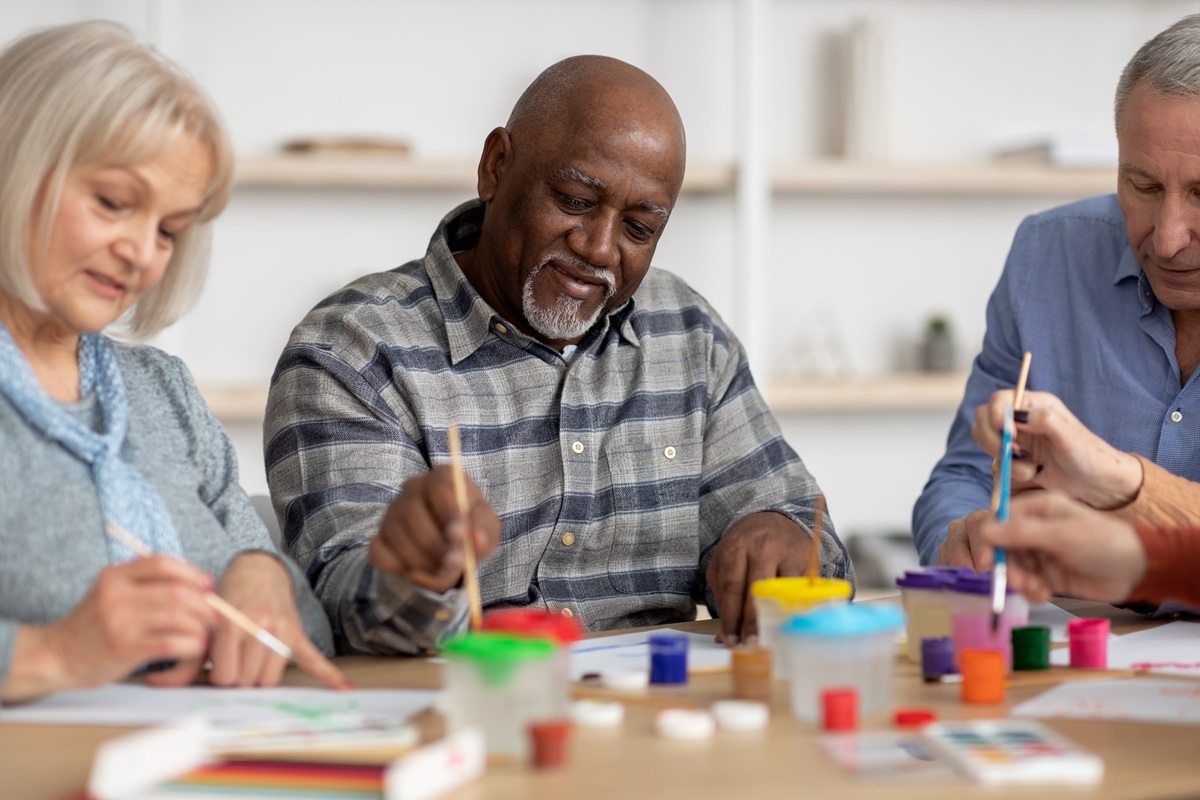
The staff organizes art-based activities like watercolor painting, working with yarn, or coloring books. Participating in these art-based outlets enhances residents’ mood, reduces anxiety, and boosts cognitive function. As a creative nonverbal expression, it helps seniors socialize and reconnect with positive memories.
Music
Whether it’s listening to music, singing while playing, or playing an instrument, these activities offer numerous benefits for people with memory loss. It offers benefits such as improved mood, reduced agitation, and enhanced memory recall, making it a more therapeutic activity for residents.
Sensory Stimulation
It’s another way memory care supports residents, even at later stages. Sensory stimulation uses sights, sounds, smells, touch, and taste to activate, engage, and comfort residents with dementia. Common examples include hand massages with scented lotion, aromatherapy, or folding soft laundry, which help reduce agitation and anxiety and improve cognitive function and mood.
Crafts
Just as art therapy is a creative outlet that helps seniors with memory loss express themselves, crafting is another creative outlet that helps them do so. Residents engage in activities such as clay modeling, holiday decoration, and card-making for families. Crafts support residents’ cognitive function, strengthen their fine motor skills, and reduce agitation.
Reminiscence & Social Engagement
Many seniors with progressing dementia still reminisce about their past. For them, it might be the time spent in school or employment that makes them feel positive about themselves. For this reason, memory care communities offer reminiscence & social engagement programs that help residents recall past moments and memories.
Memory Albums
Residents are encouraged to review old family photos and create scrapbooks. It proves to be a personalized, tangible, and emotionally meaningful way to support residents’ wellness.
Storytelling
Residents are encouraged to share stories with peers about their childhood or careers. Storytelling supports memory care residents by enhancing cognitive function, reducing agitation, and improving emotional well-being.
Virtual Tours
Virtual reality (VR) tours are another essential activity that supports seniors’ overall wellness. Using tools like Google Earth, residents can revisit their childhood neighborhoods or favorite vacation spots.
Physical & Outdoor Activities
Achieving holistic wellness also entails physical wellness, for which memory care communities offer physical & outdoor activities. Light and moderate exercise increase blood flow to the brain, while outdoor excursions help break the monotony of daily life.
Nature Walks
Preferably in the morning, residents go on short, guided walks in a park.
Gardening
Seniors plant, water, and care for indoor potted plants, which keeps them mentally and physically active.
Simple Exercise
It could be gentle dancing, balloon toss, or chair yoga that supports residents’ physical function and wellness.
Household & Daily Routine Activities
Following regular routines helps residents feel at home in their new surroundings and get along with everyone in the community. It provides them with a sense of relief and reduced agitation, too, as living in the new environment may feel unfamiliar. Here’s what the community offers to promote a daily routine.
Cooking & Baking
Even those with declining mobility are encouraged to engage in simple tasks, such as stirring batter or decorating cookies.
Sorting Tasks
Sorting tasks such as organizing silverware, folding laundry, or sorting buttons by color help residents with cognitive stimulation, enhance fine motor skills, and reduce anxiety.
Attain Longevity With Bayshire Carlsbad
At Bayshire Carlsbad, we understand that engaging activities for memory loss don’t need to be overly complex or unique. The key is helping residents feel connected, not just with the environment around them but with themselves, too. A memory care community offers a range of holistic activities tailored to residents’ care needs and personal preferences, helping them achieve the best possible health outcomes.
The key for families to experience these wellness benefits for their dementia-affected loved one is to choose a reliable memory care community like ours at Bayshire Carlsbad. In our community, we promote whole-person wellness through care programs centered around comprehensive well-being. Residents receive compassionate, personalized care that helps them find meaning and purpose in their daily lives, even with advanced stages of dementia.
To learn more about our care plans and cost structure, contact us to schedule a tour of our premier memory care community.
